Summer Pollinator Adventure Week – Day Three
The final day of Summer Pollinator Adventure Week celebrated one of nature’s hardest workers—the bee. Through storytelling, scientific observation, and creative conservation projects, participants discovered that not all bees live in hives and that everyone can help protect pollinators.
Exploring the Life of a Honeybee
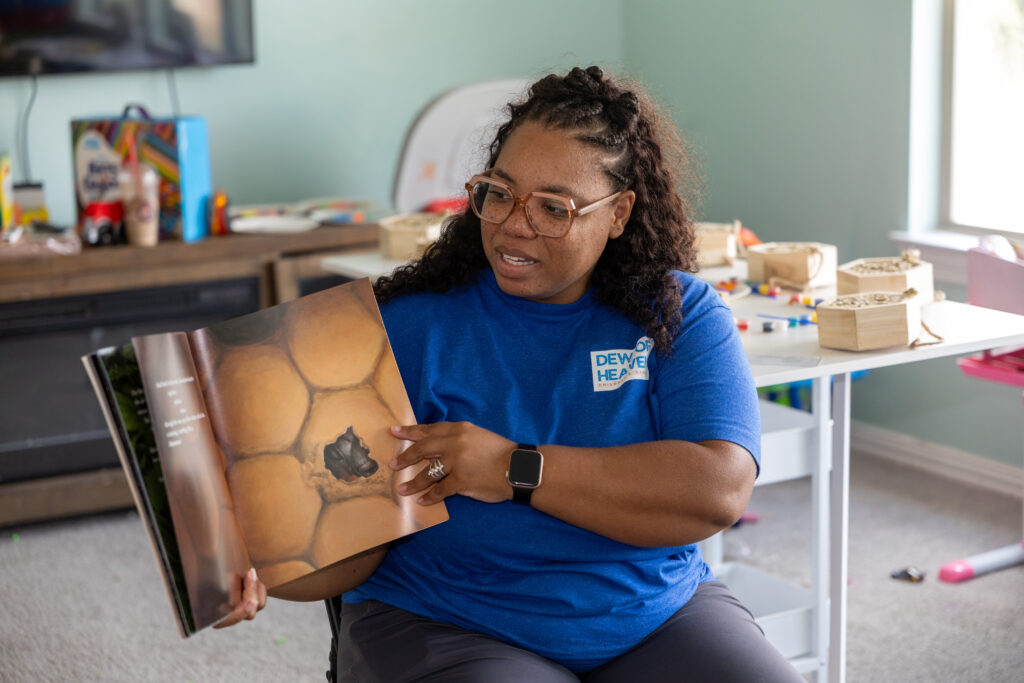
Mrs. Syph introduced participants to Honeybee: The Busy Life of Apis Mellifera, bringing the remarkable life of honeybees to life through vivid storytelling.
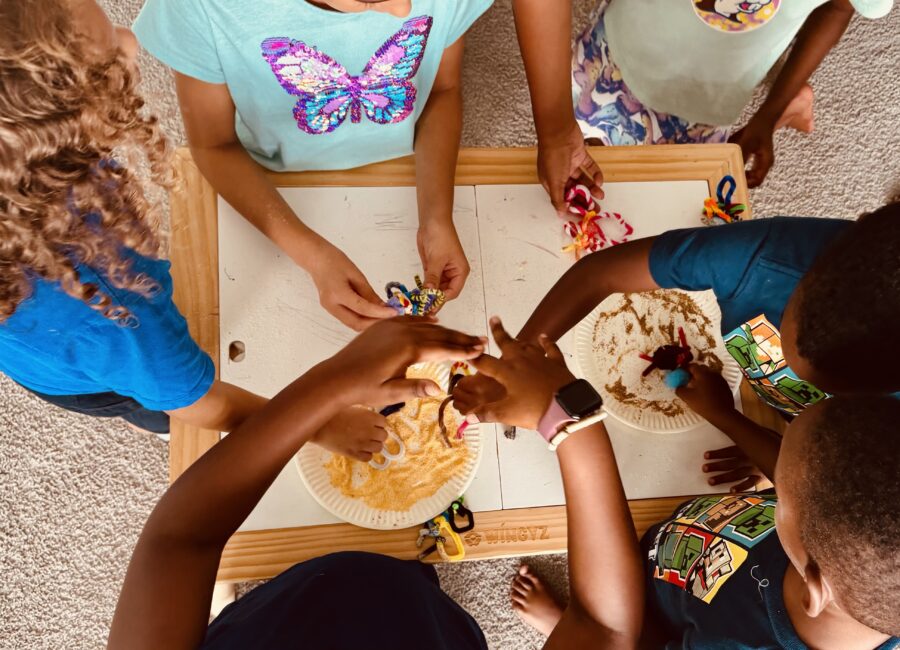
As the story unfolded, children examined authentic specimens representing different stages of a bee’s life cycle, along with examples of queens, workers, drones, beeswax, and honey. Enlarged educational models helped participants observe details they might otherwise miss.
The experience transformed abstract scientific concepts into tangible learning.
Honeybees and Solitary Bees
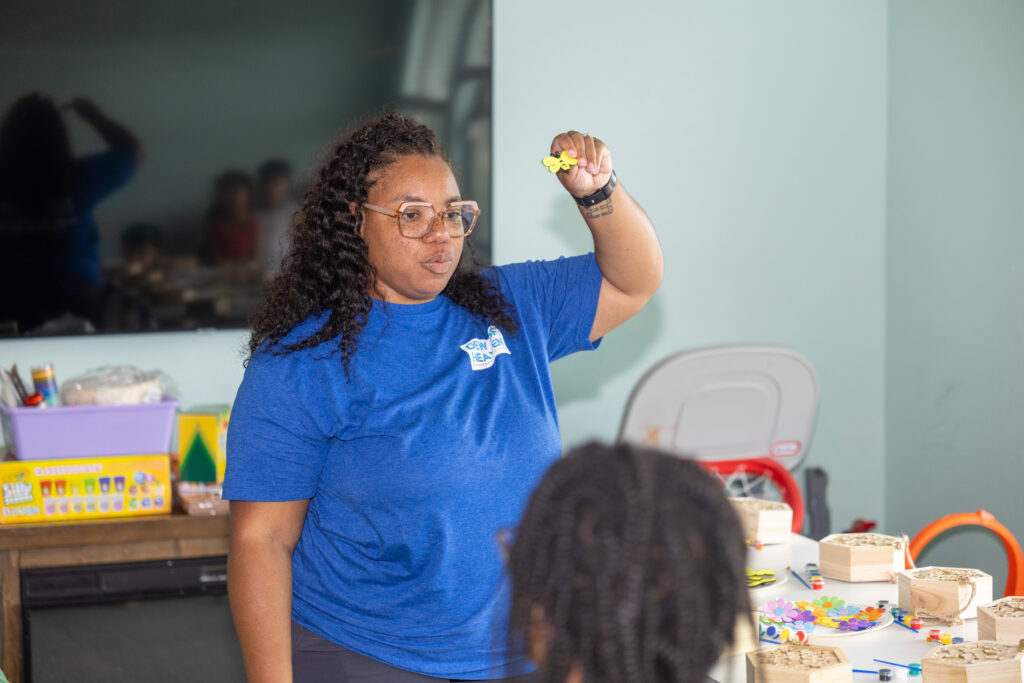
Participants also discovered that many native bees do not live in hives.
Mrs. Syph explained the differences between honeybees and solitary bees, emphasizing that many native pollinators rely on natural cavities rather than colonies for shelter.
Understanding these differences helped children appreciate the diversity of pollinators found in their own communities.
Building Homes for Pollinators
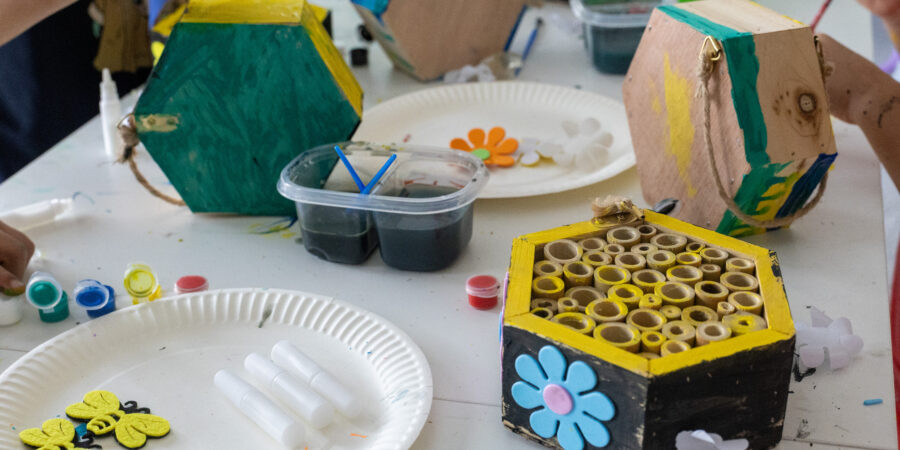
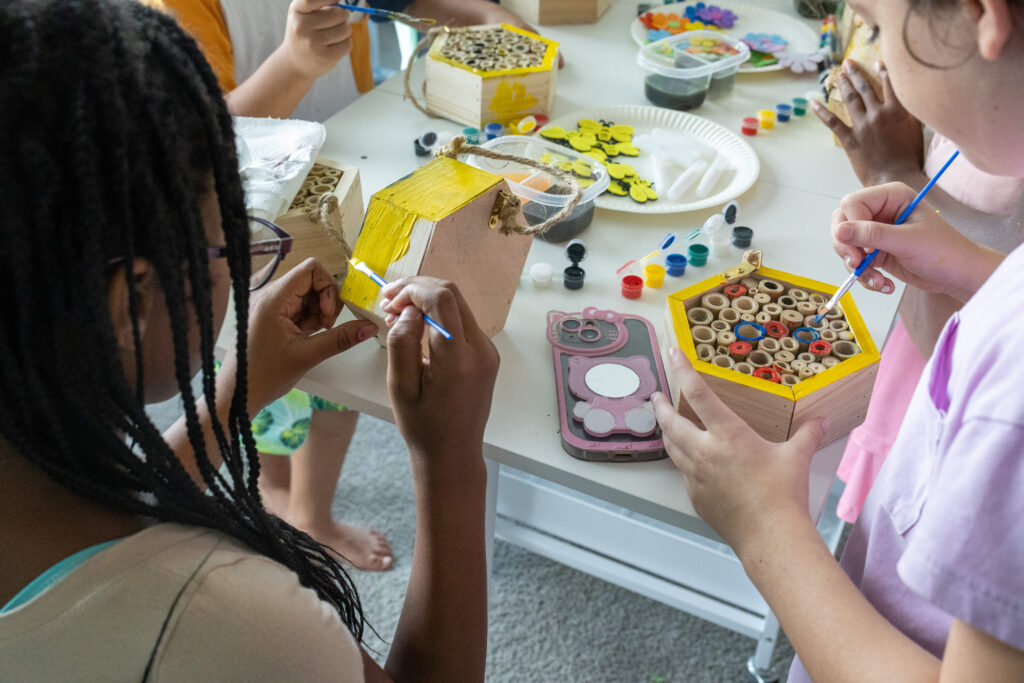
To support solitary bees, each participant painted and assembled a bee house to take home.
While expressing their creativity, the children discussed how providing nesting habitat can help native bee populations thrive. Younger participants reinforced their learning through an active bee-themed movement game.
The camp concluded with a healthy taco lunch and plenty of excitement about placing their new bee houses outdoors.
DHCG sincerely thanks Winston County Self Help Cooperative for sponsoring a week of inquiry, exploration, and environmental stewardship that inspired children to care for the natural world.
Learning Spotlight
Participants learned to:
- Identify differences between honeybees and solitary bees.
- Describe the honeybee life cycle.
- Explain why pollinators are essential to food production.
- Create habitat that supports native bees.
- Recognize that everyone can play a role in protecting pollinators.
This post is part of DHCG’s Summer Pollinator Adventure Week series, highlighting how hands-on experiences in nature inspire curiosity, scientific thinking, and environmental stewardship. Through stories, exploration, and creative learning, young participants discover the important role they play in caring for the world around them. View all posts in this series.
Visit our Events Page to join in on the fun!