
From Soil to Stewardship: A Year of Learning at Dew of Heaven Children’s Garden — Part 7
Growth in agriculture is rarely linear.
As the fall garden at Dew of Heaven Children’s Garden began to mature, participants experienced firsthand what it means to work with living systems—systems shaped by weather, pests, animals, and human decision-making. This phase of the garden reinforced a critical lesson: successful growing requires observation, adaptation, and resilience.
When Nature Pushes Back
On October 25, 2025, the Spring, Texas area experienced severe thunderstorms and confirmed tornado activity across Harris County. Widespread power outages and storm damage affected many communities, including the garden site.
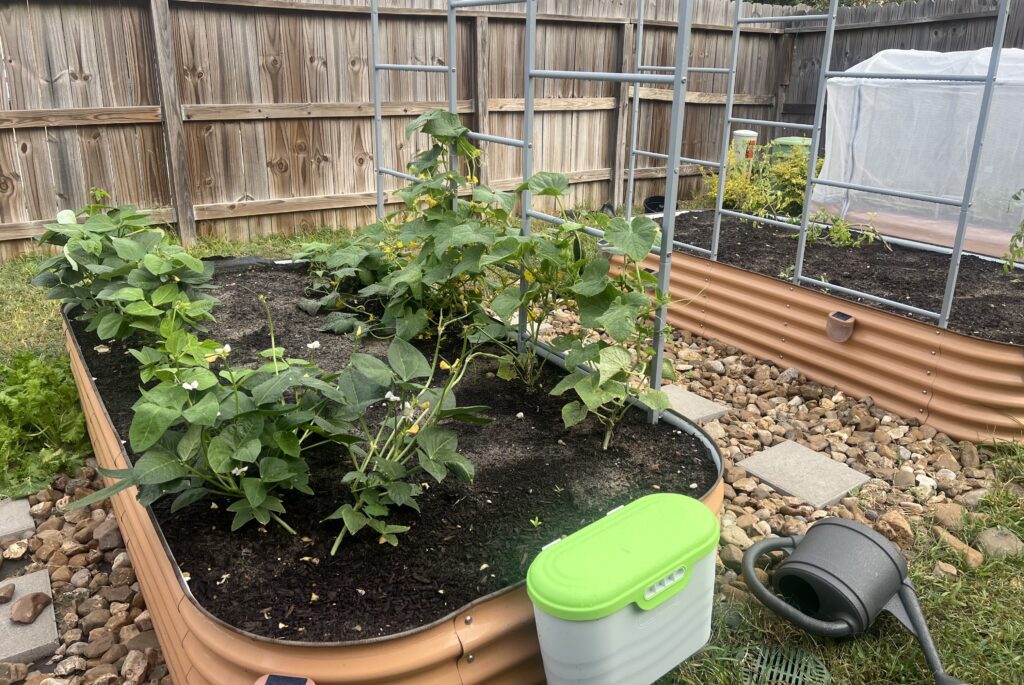
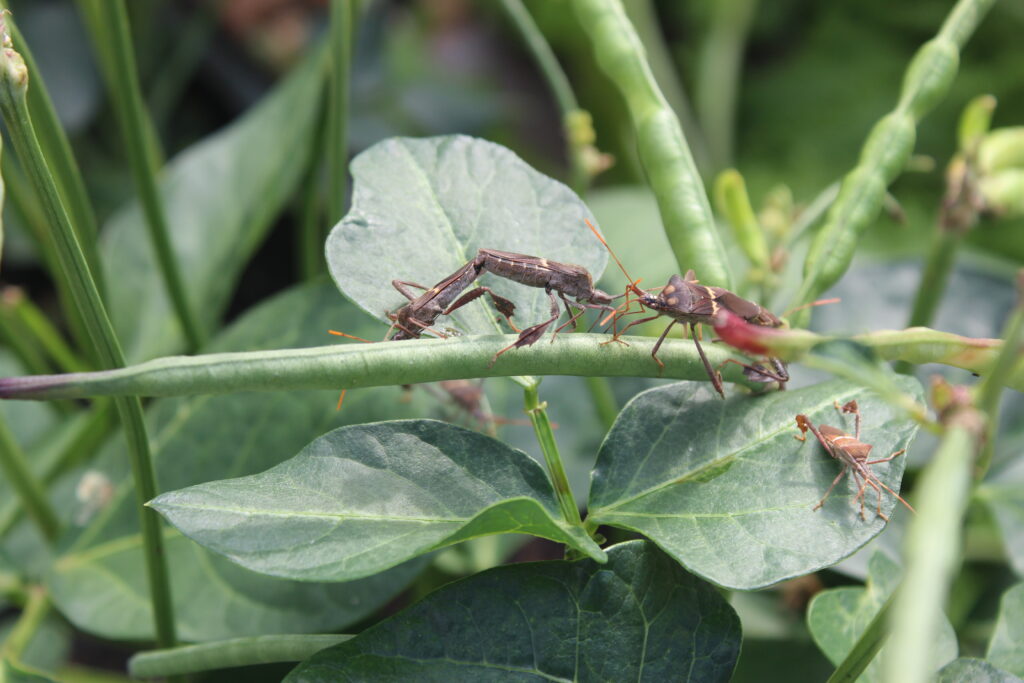
Strong winds blew over the cow pea plants. While the plants remained alive, the stress from the storm appeared to compromise them. In the weeks that followed, participants observed a significant pest infestation.
The cow peas were affected by Callosobruchus maculatus (cowpea weevils), which bore into the peas. The damage attracted bright orange ants, drawn to the sweet substances produced as the weevils fed. Participants learned that plant stress can make crops more vulnerable to secondary issues and that not every outcome has a single, clear cause.
These observations became a real-time lesson in plant health, pest cycles, and environmental stressors.

Learning from Loss: Heat Stress in the Worm System
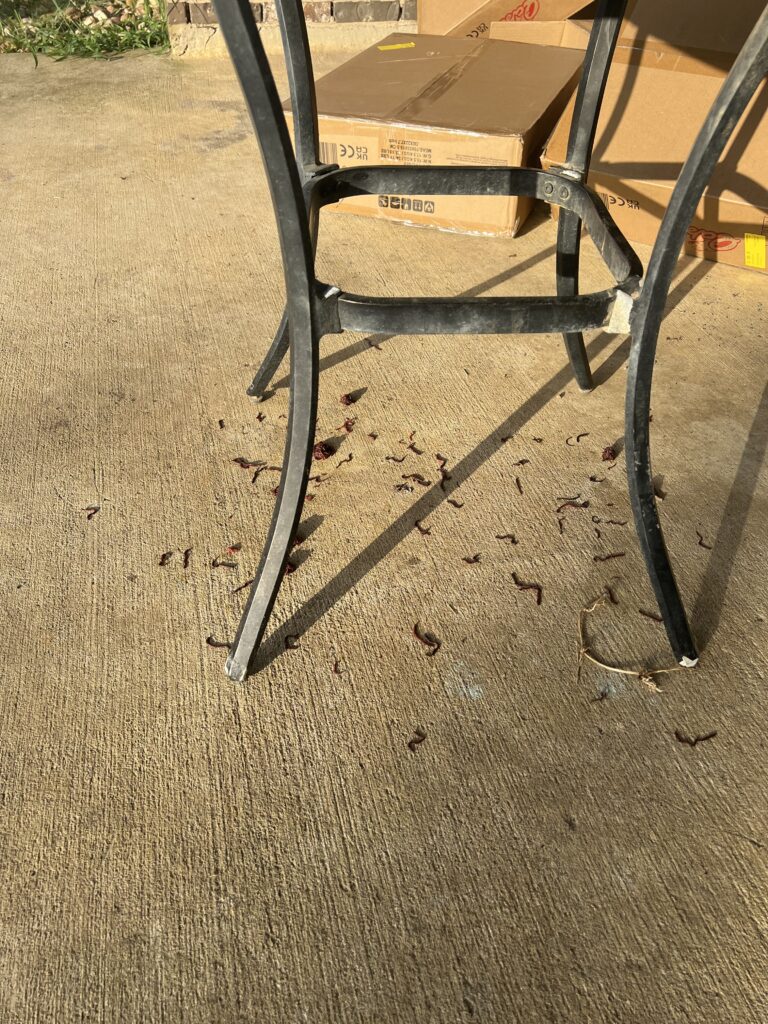
Not all challenges in the garden came from storms or pests. During the height of the Texas heat, the worm bins were inadvertently left exposed to temperatures beyond what the system could tolerate.
As a result, the worm population experienced significant loss.
This moment became a critical lesson in environmental limits and responsibility. Participants discussed how temperature, shade, airflow, and placement are just as important for soil organisms as water and food. Unlike plants rooted in the ground, contained systems such as worm bins are especially vulnerable to extreme heat if not carefully managed.
Rather than moving past the loss quickly, time was taken to reflect on what happened, what factors contributed, and how similar outcomes can be prevented in the future. This included conversations about:
- Appropriate placement of living systems
- Monitoring weather conditions
- Anticipating seasonal risks
- Adjusting care practices as conditions change
The experience reinforced that stewardship includes accountability—and that learning often comes through honest reflection when systems fail.
These experiences—whether caused by weather, pests, or heat—reinforced that agriculture requires constant attention, humility, and adaptation.

Beneficial Insects at Work
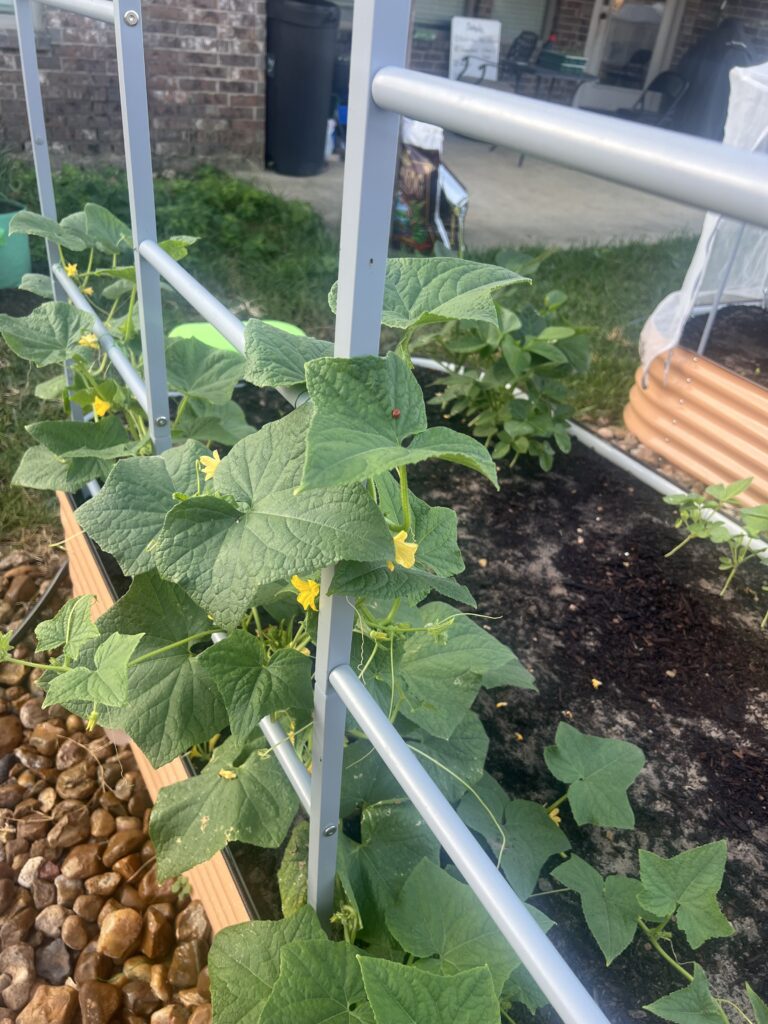
Not all insects posed challenges. As the garden matured, participants noticed an increase in beneficial insects, including bees and ladybugs.
The presence of bees reinforced lessons on pollination and ecosystem support. Ladybugs, in particular, became a welcome sight as participants observed them feeding on aphids that had begun overpopulating cow peas, greens, and cucumber leaves.
Seeing natural pest control in action helped participants understand that healthy gardens rely on balance—not elimination—and that supporting beneficial insects is an important part of sustainable growing.

Boundaries in Shared Spaces
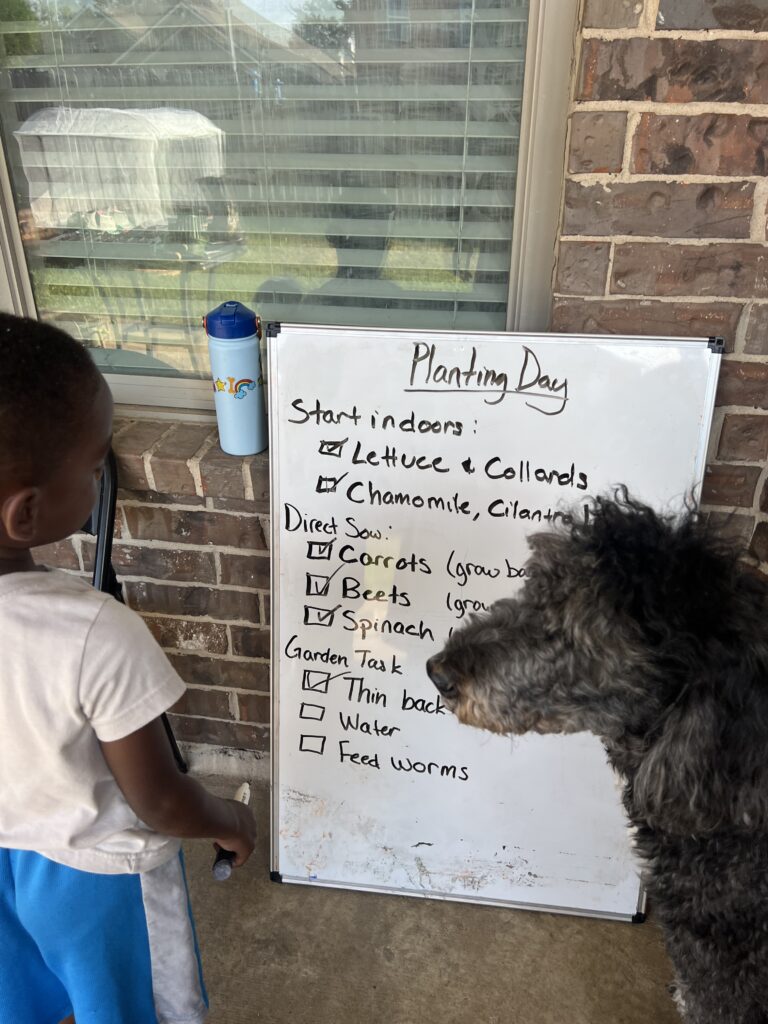
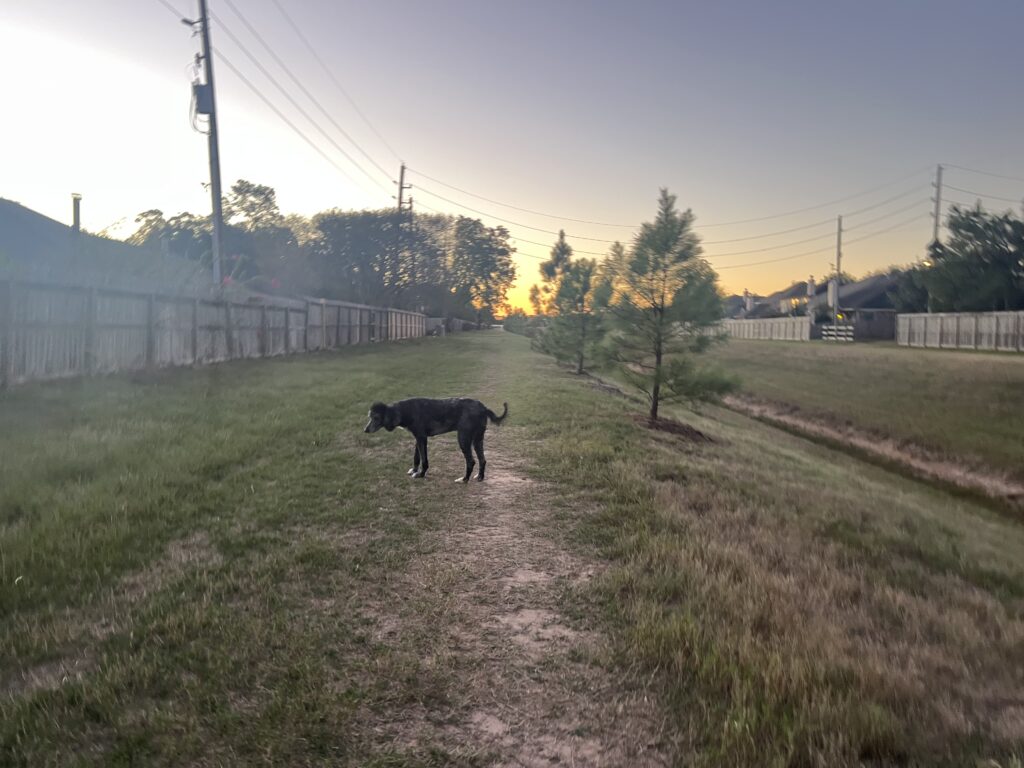
The garden is located on a property with a domesticated dog who plays an important role in keeping wild animals—especially opossums—away from the growing area. This has helped protect crops from wildlife damage.
However, one day the dog jumped into a raised bed and began digging, mirroring behavior she had observed from participants. The incident became an opportunity to discuss boundaries and supervision.
The dog was corrected and is no longer allowed in the garden unsupervised. This experience reinforced that while animals can be valuable companions and protectors, clear boundaries are essential in shared agricultural spaces.
Watching Growth Take Shape
Despite challenges, the garden continued to produce. Participants closely tracked crop development and quickly noticed differences in growth rates.
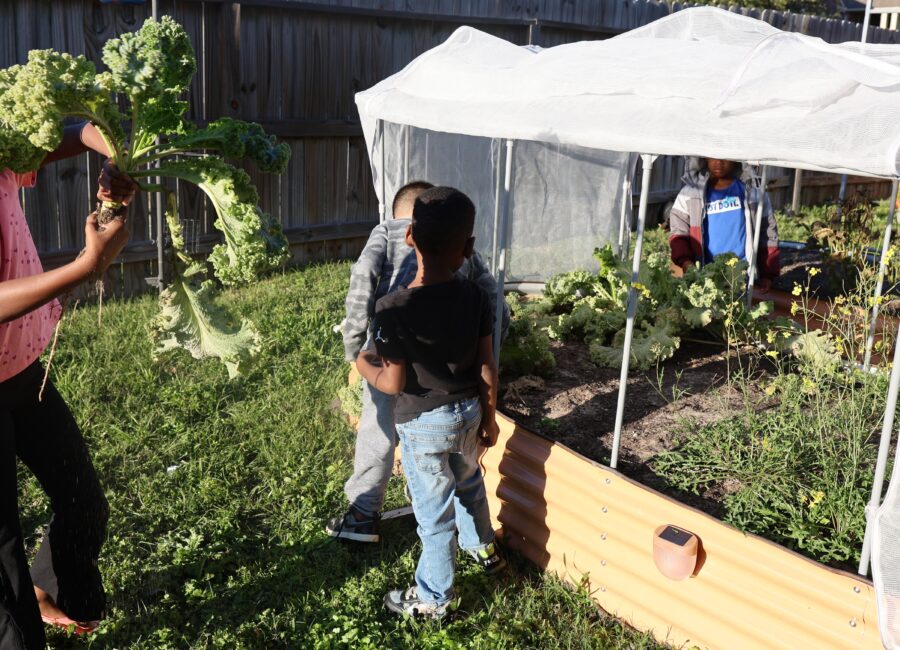
Radishes grew the fastest and became the first crop harvested. They were followed by snacking and pickling cucumbers and a variety of greens. These early successes boosted confidence and reinforced patience, as participants saw how earlier decisions led to tangible outcomes.


Lessons in Adaptation
This phase of the garden made one thing clear: challenges are not interruptions to learning—they are the lesson.
Participants learned that:
- Weather can reshape plans overnight
- Pests respond to plant stress and environmental conditions
- Beneficial insects play a critical role in garden health
- Boundaries—whether with animals or systems—matter
- Growth and setbacks often happen side by side
Through observation and discussion, participants gained confidence in responding thoughtfully rather than reactively.
Learning Spotlight
Key concepts reinforced: resilience, pest identification, beneficial insects, environmental stress, and adaptive management.
👉 This post is part of DHCG’s ongoing series, From Soil to Stewardship, documenting how participants learn to adapt, respond, and grow through real-world agricultural experiences.
View all posts in this series.
👉 Visit our Events Page to join in on the fun.