From Soil to Stewardship: A Year of Learning at Dew of Heaven Children’s Garden— Part 1
Before our garden beds were built and before seeds ever touched the soil, learning at Dew of Heaven Children’s Garden began in a different place: the kitchen.
Food preparation and preservation were the first lessons of the season. Through hands-on activities like baking, processing fruit, preparing proteins, and preserving potatoes, participants began to understand a foundational truth of agriculture—food does not start at the store. It begins with knowledge, intention, and skill.
This work laid the groundwork for everything that followed.
Pecan Pie as an Agricultural Learning Experience
The pecan pie workshop began with an introduction to sourcing and supply. The pecans used in the activity were donated to Dew of Heaven Children’s Garden by a farmer in New Mexico, allowing participants to trace ingredients back to their agricultural origin.
Rather than treating baking as an isolated activity, the workshop was intentionally designed to connect farming, food preparation, and gratitude for agricultural producers. Participants worked through the steps of preparing the filling, assembling the pie, and baking, while learning that even familiar desserts begin with crops grown, harvested, and shared by farmers.
Receiving donated pecans also provided an opportunity to discuss stewardship, generosity, and the role of farmer partnerships in strengthening food systems.
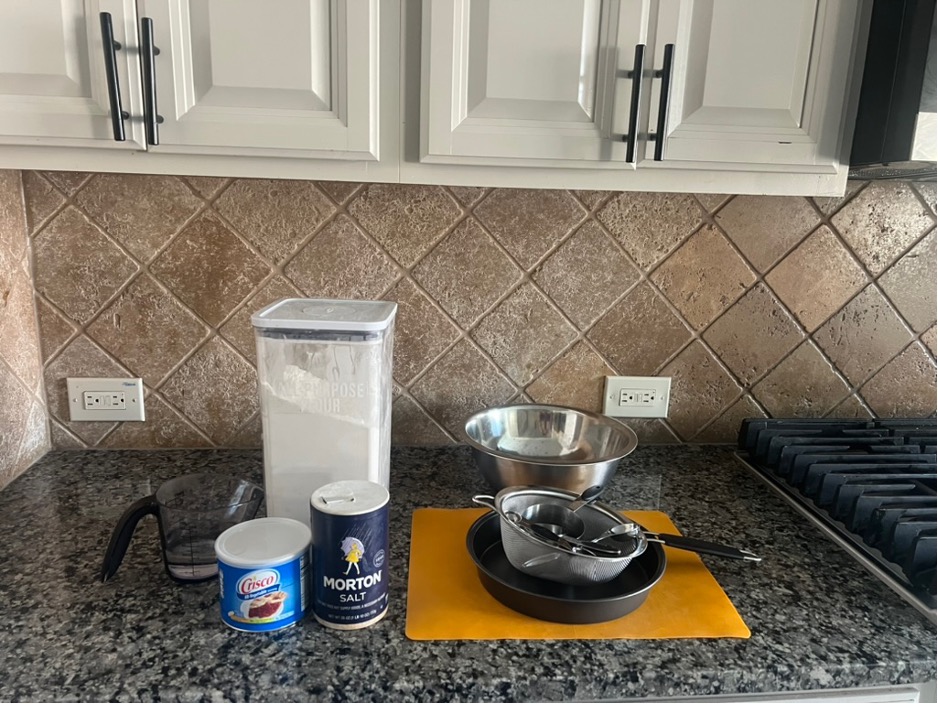
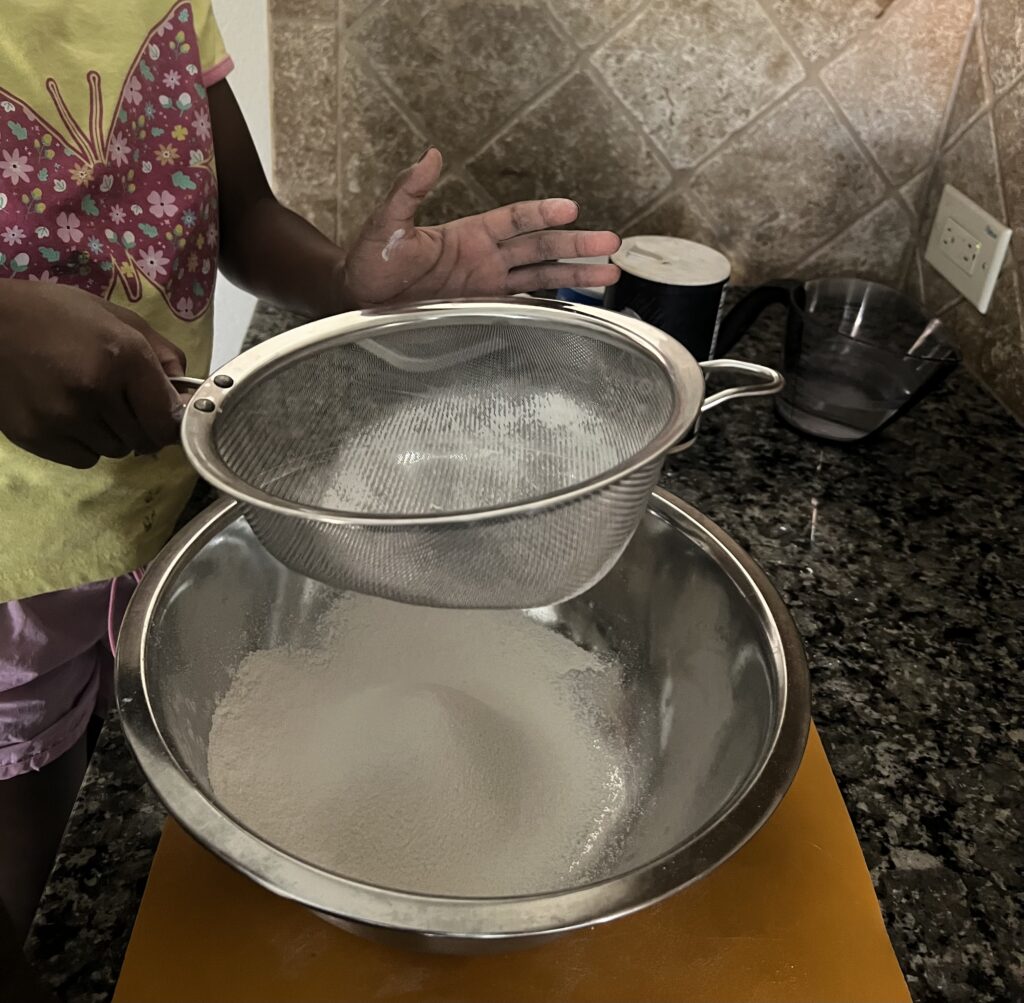
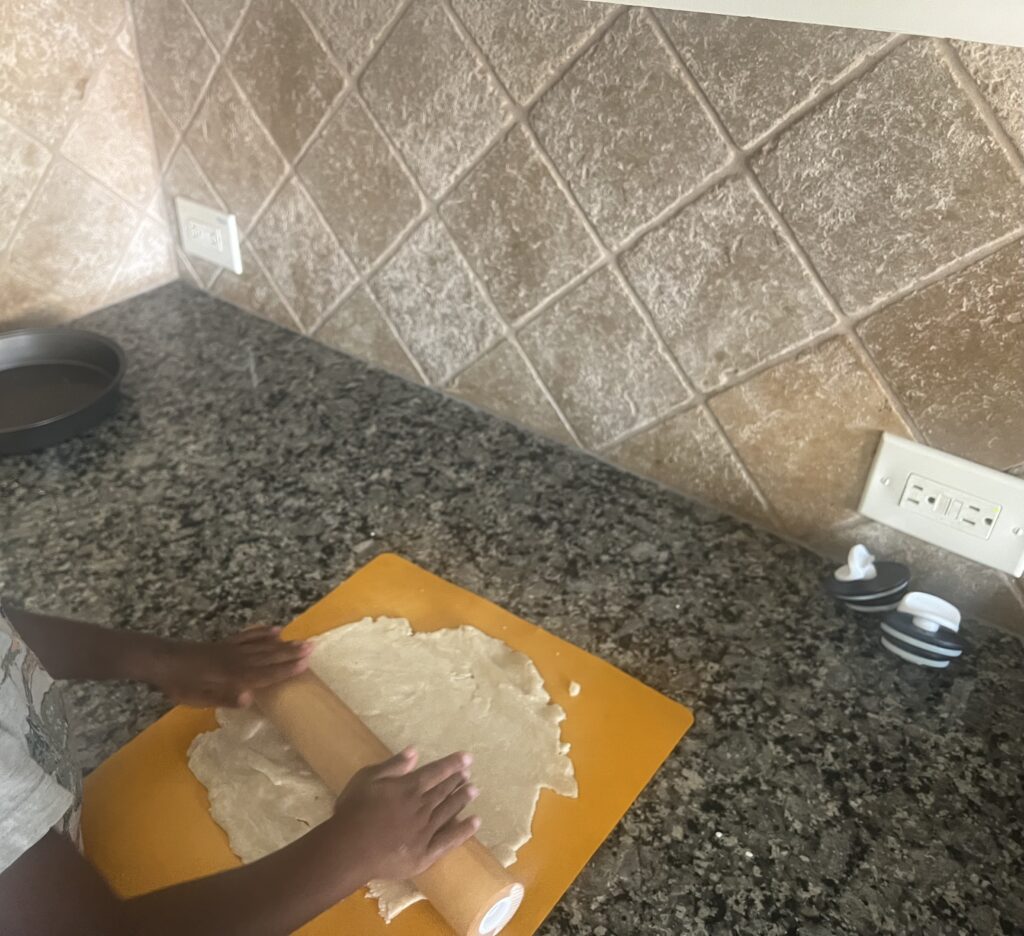
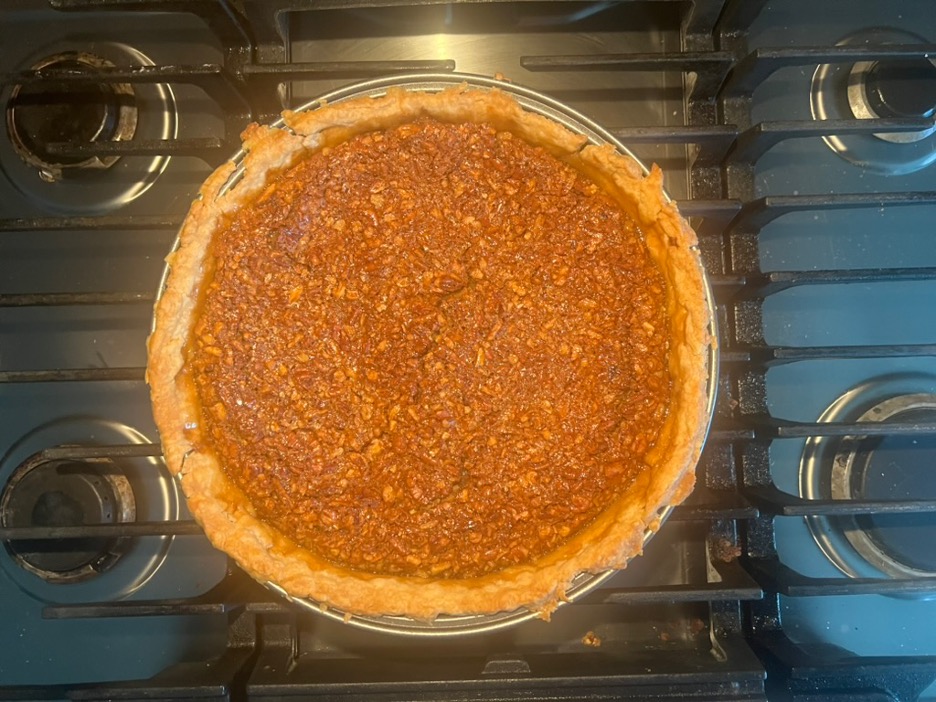
Partner Spotlight: Ingredients for this activity were generously provided by Nueva Utopia 1844 allowing participants to connect food preparation to its agricultural source.
From Fruit to Juice: Seeing the Process
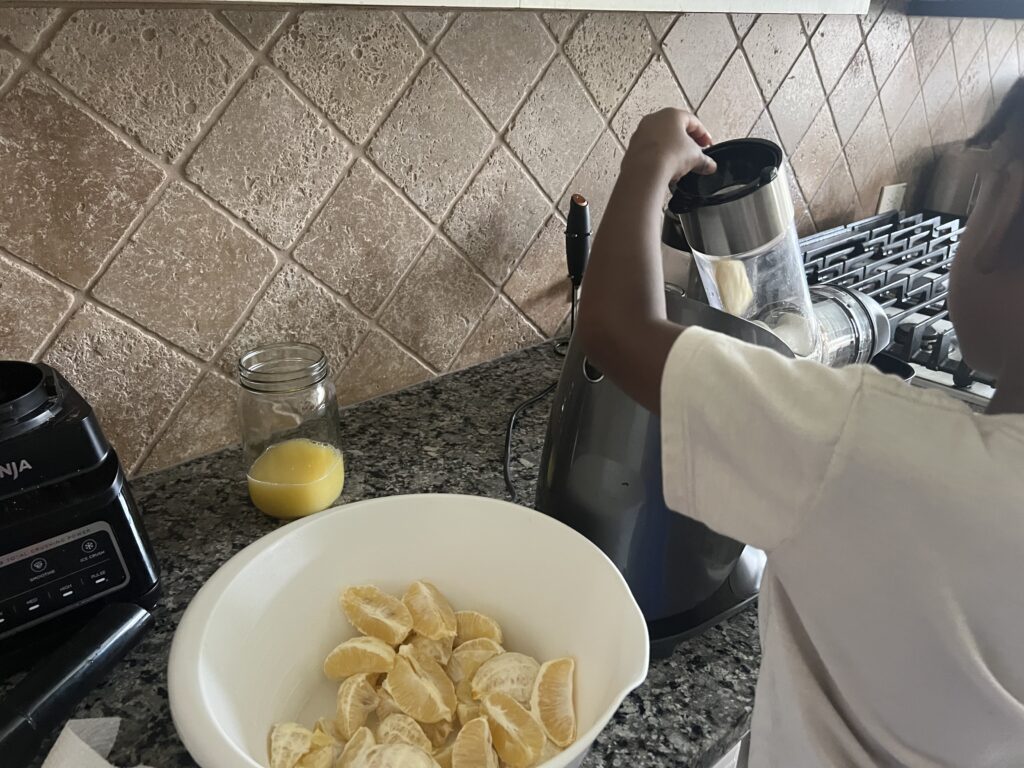
Fruit processing and juice making gave young participants a clear view of how raw ingredients are transformed. By peeling, sorting, and feeding fruit through the juicer, participants learned that preparation and cleanliness matter just as much as the final product.
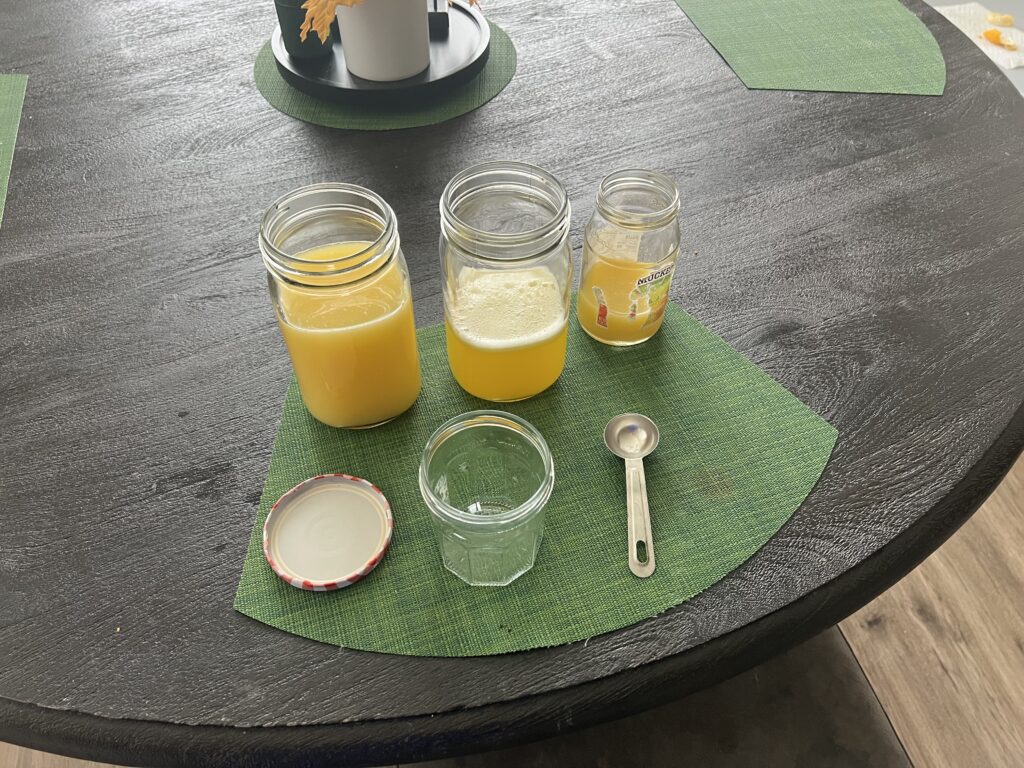
Slightly older participants were given the opportunity to create their own juice combinations, making decisions about flavor balance and ingredient ratios. Their finished juices were then sampled and evaluated by younger participants, who served as taste testers. This peer-based feedback introduced early concepts of quality assessment and audience preference.
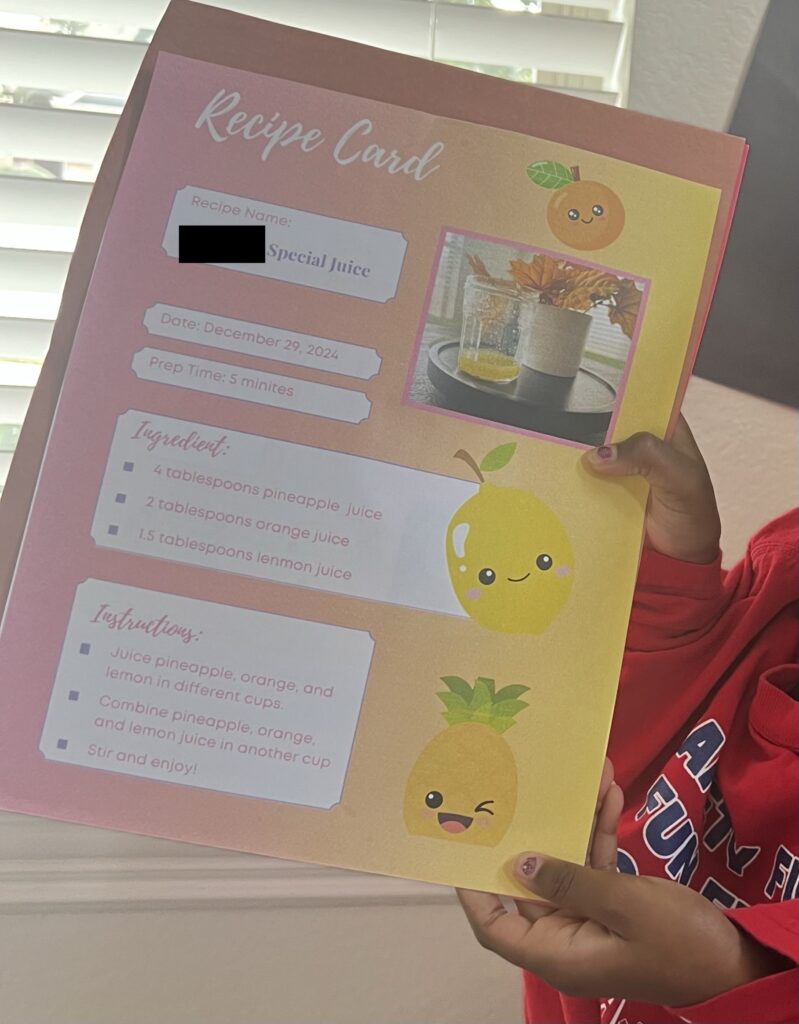
To complete the activity, students transitioned from the kitchen to the computer, where they designed recipe cards for their original juice creations. Each card included a name for the recipe, preparation time, an ingredients list with exact amounts, and clear, step-by-step instructions. This process reinforced literacy, measurement, sequencing, and documentation—skills that mirror real-world food production and entrepreneurship.
From Fruit to Shelf: Preserving Through Canning
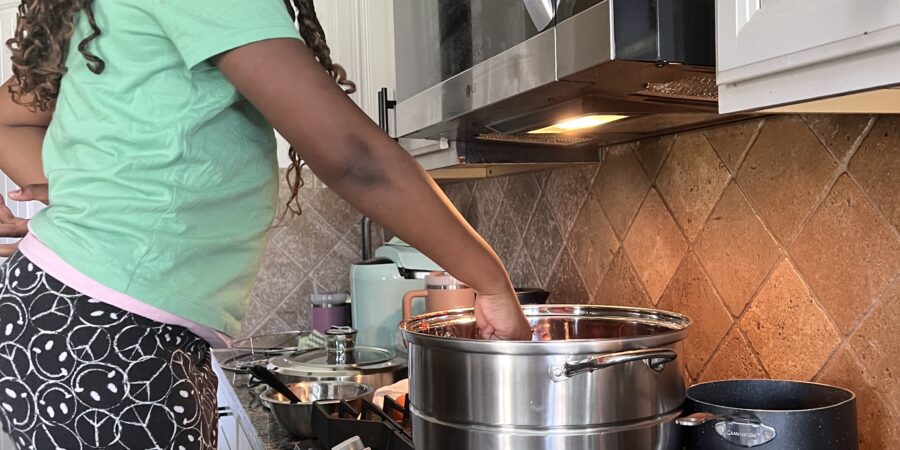
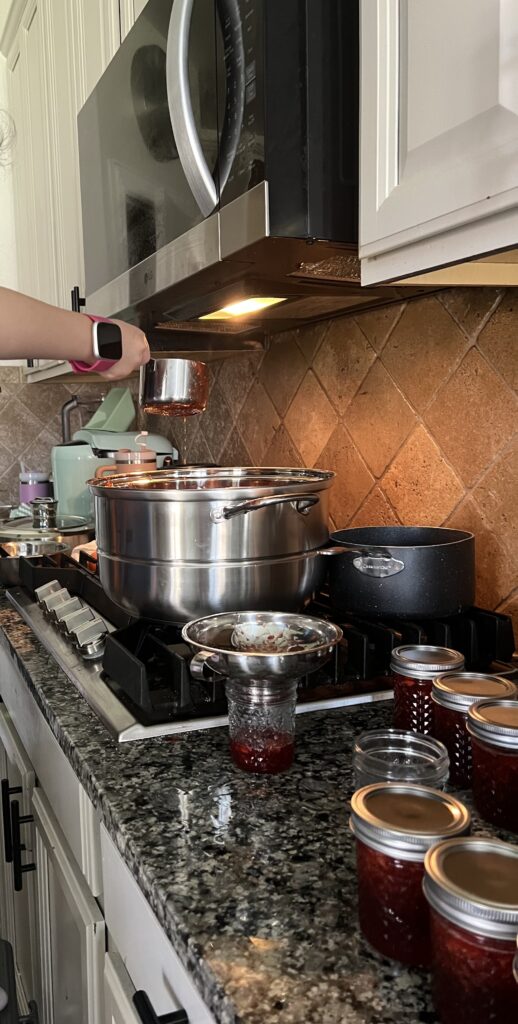
We delivered a hands-on canning workshop focused on strawberry jam. Participants were introduced to the water bath canning method and learned why heat, timing, and proper sealing are essential for safe food preservation.
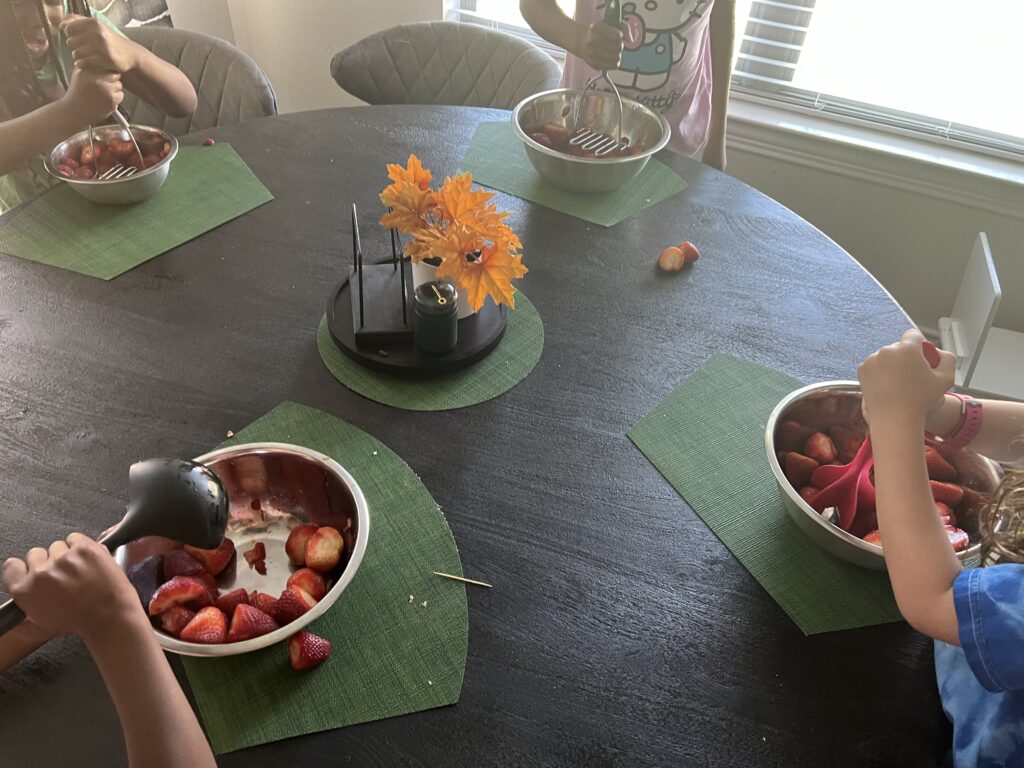
During the workshop, participants smashed fresh strawberries, prepared the jam, and filled jars before processing them in a water bath. Each step emphasized accuracy, cleanliness, and attention to detail—skills critical to both food safety and successful preservation.
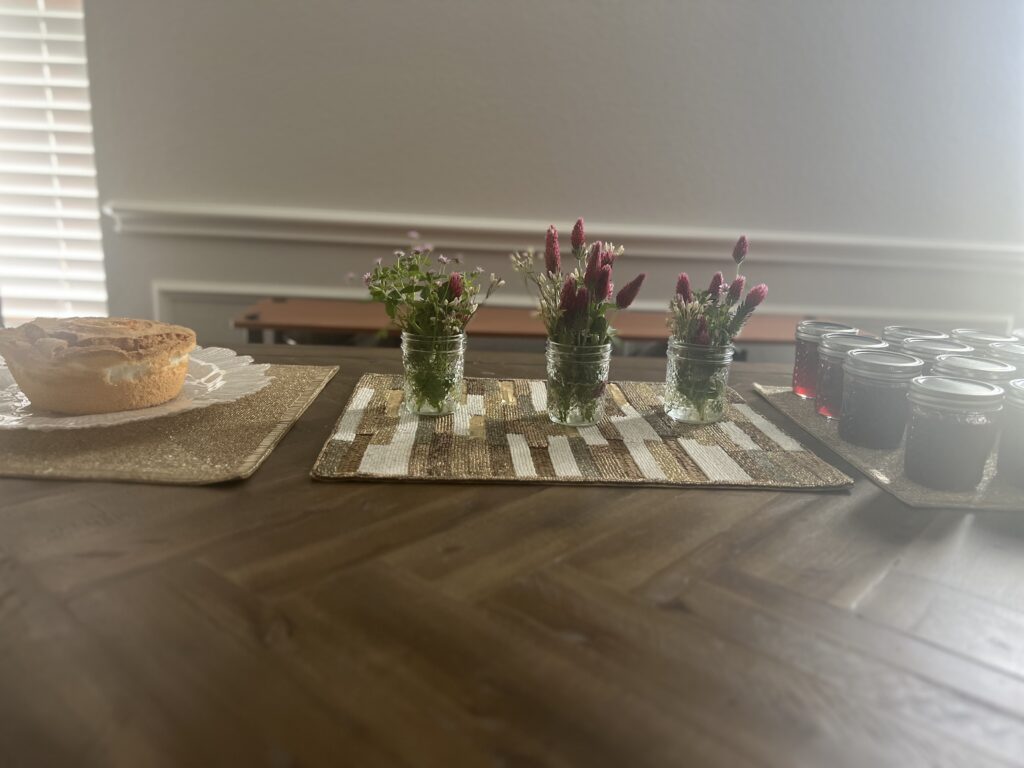
To close the activity, participants shared a previously prepared jar of strawberry jam served with angel food cake. One participant also selected seasonal flowers to set the table, reinforcing that food preparation includes presentation, care, and shared experience.
This workshop reinforced that preservation is not only about storing food, but about extending its value, celebrating effort, and understanding the full journey from ingredient to table.
Protein Processing and Bread Making
We introduced young participants to how familiar foods are made from the ground up. In this lesson we focused on sandwiches—an everyday food many young participants recognize but rarely see prepared from scratch.
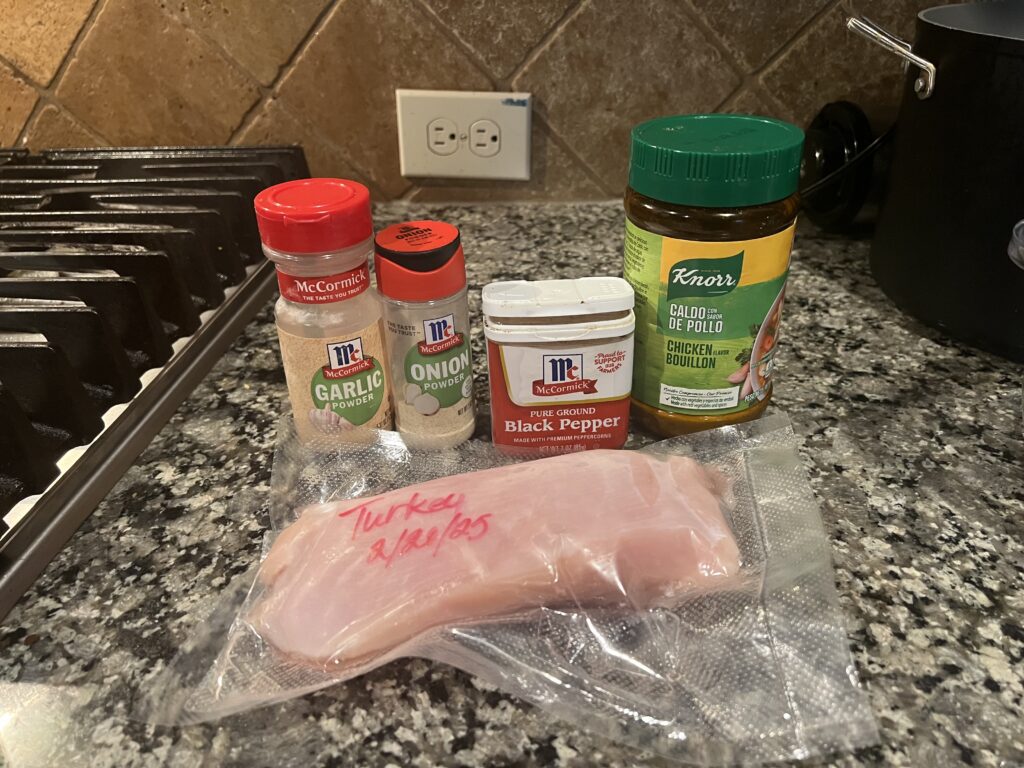
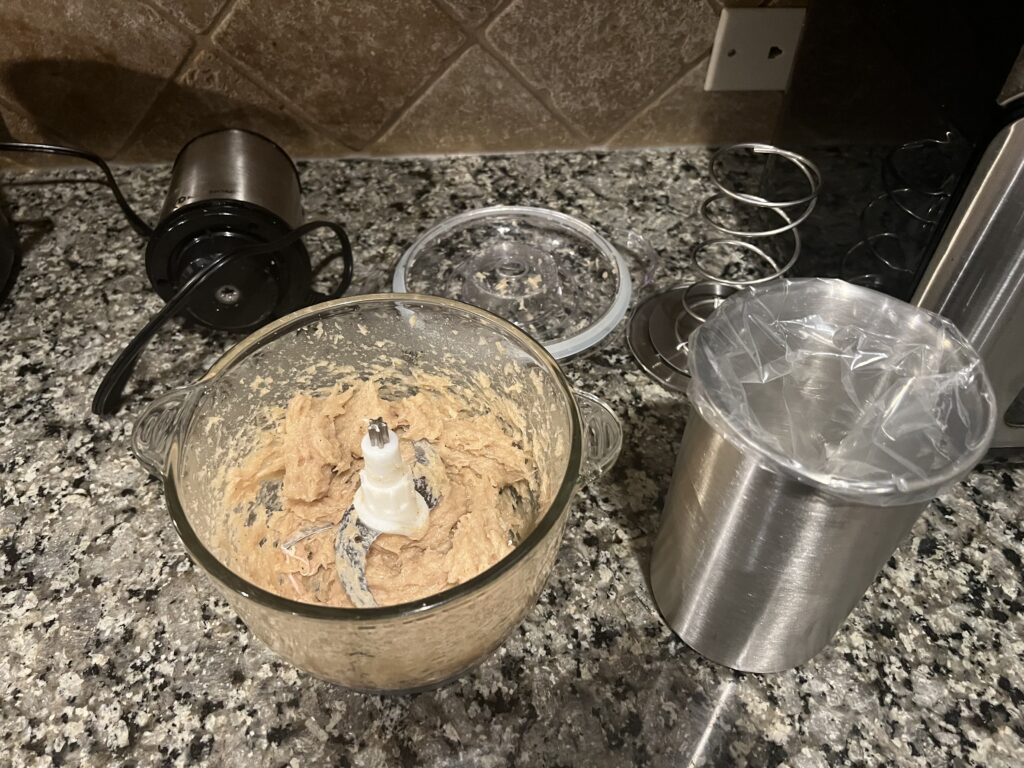
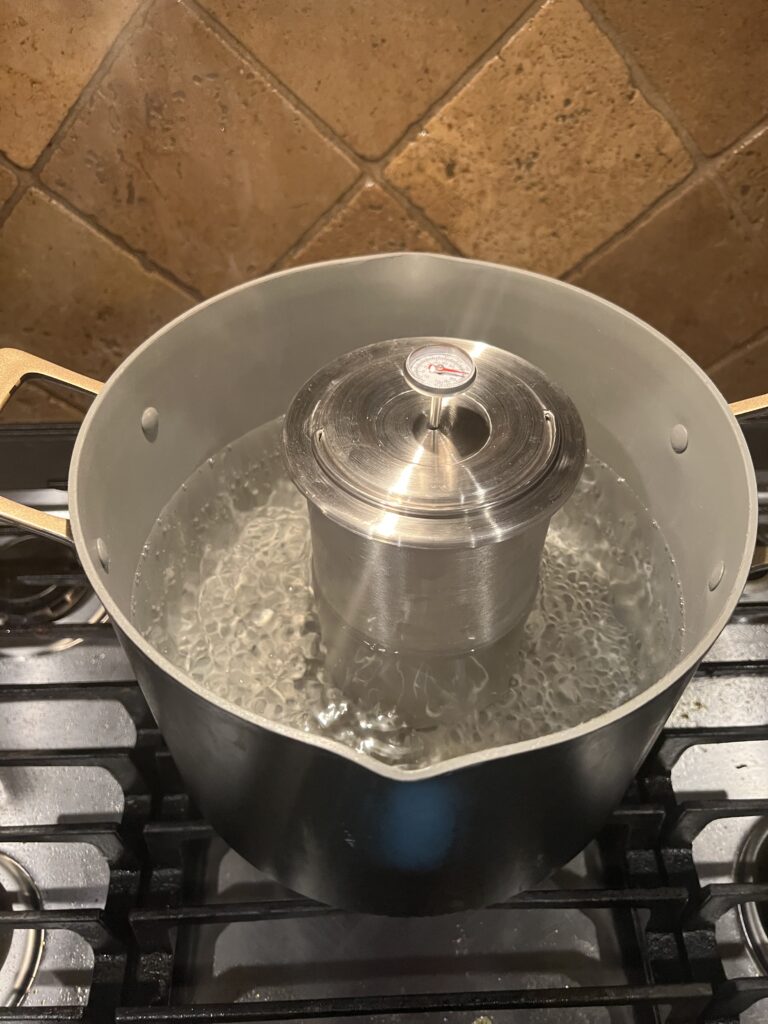
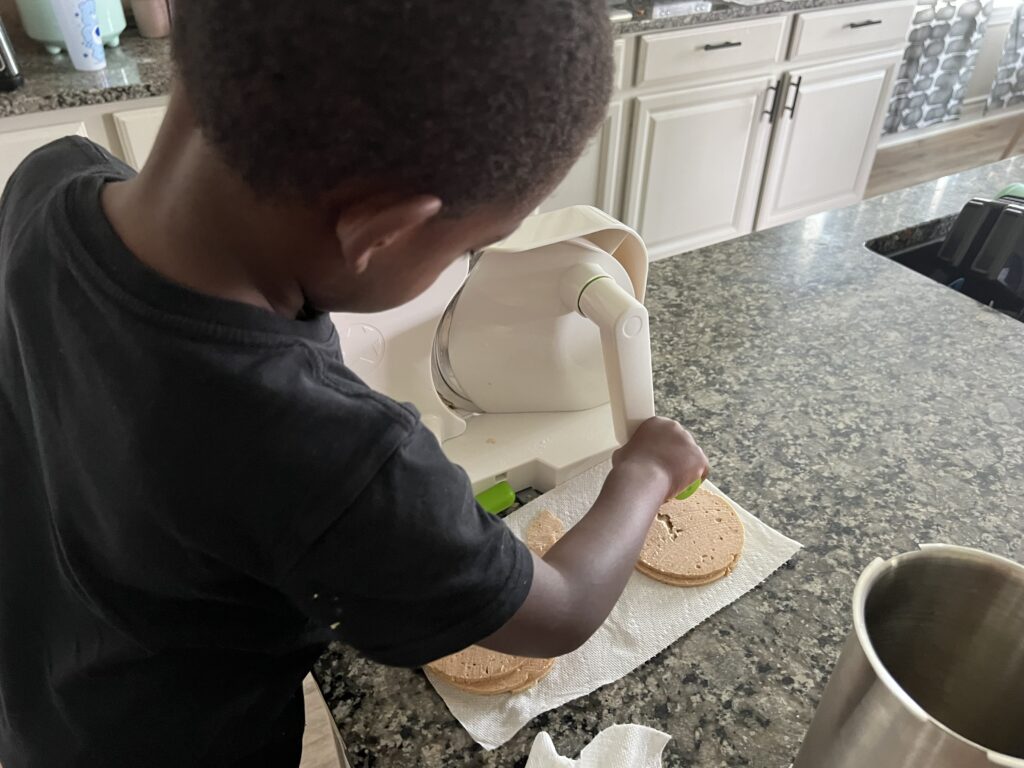
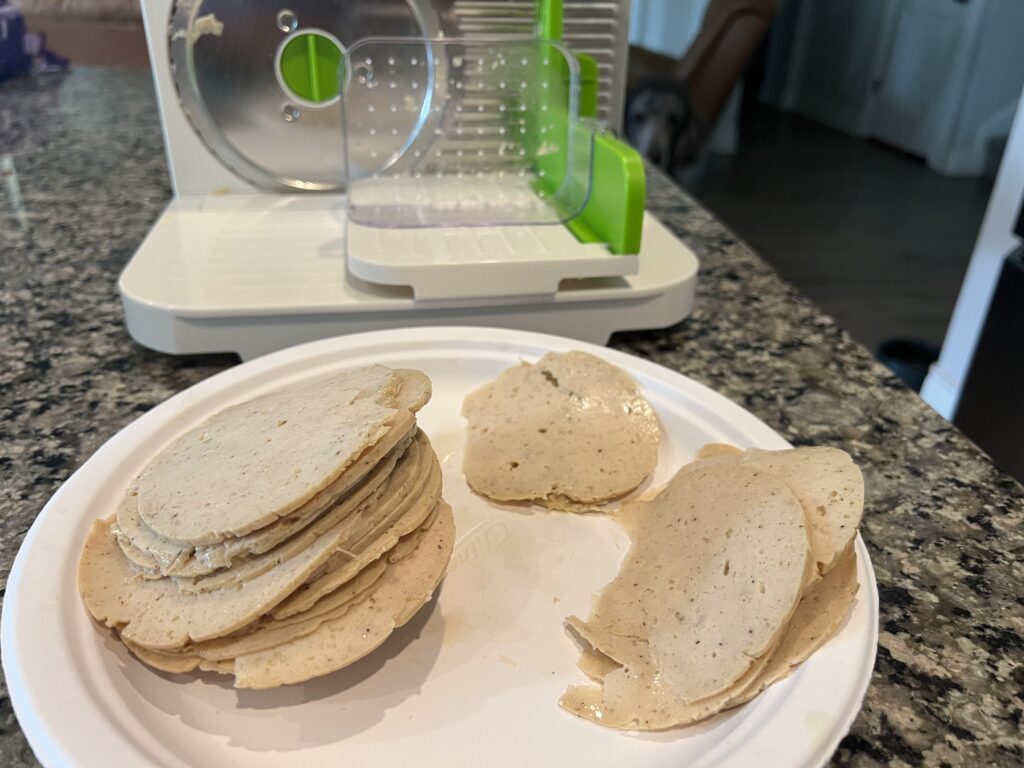
Participants learned how ground meat can be seasoned, shaped, and cooked using a press mold before being chilled and sliced into lunch meat. This hands-on process emphasized food safety, consistency, and patience, while also demonstrating that processed foods do not have to come from a factory.
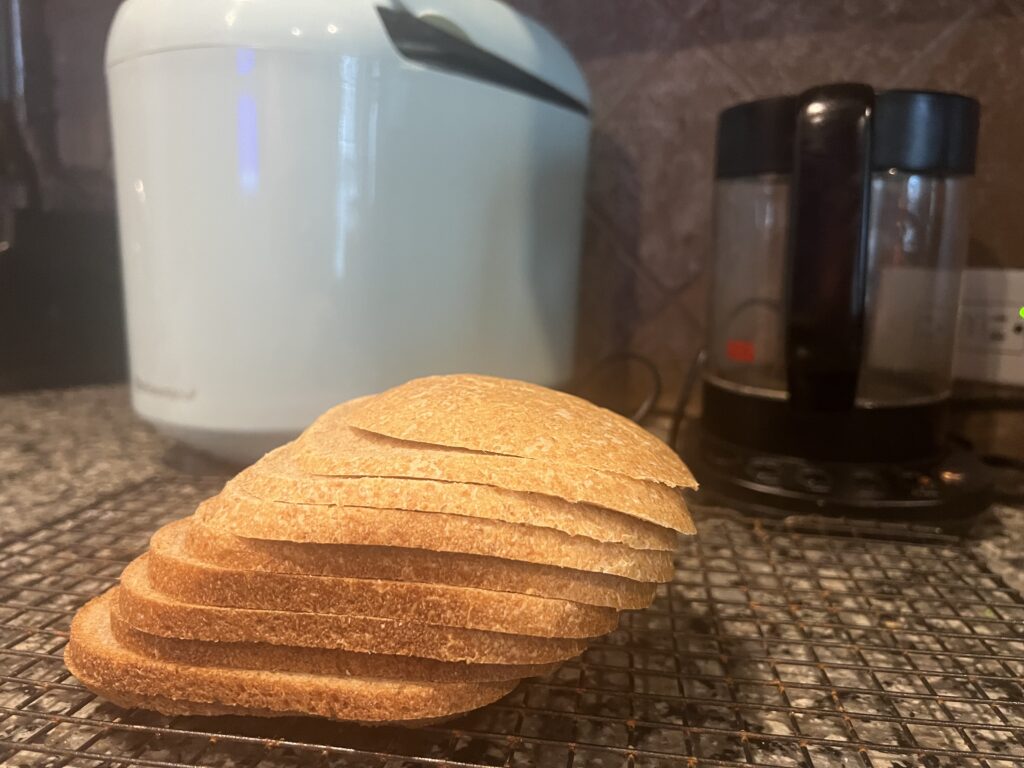
Alongside protein preparation, students worked through bread making, reinforcing measurement, sequencing, and timing. By the end of the activity, participants were able to see—and taste—how multiple skills come together to create a complete meal.
This experience helped participants connect agriculture, food preparation, and self-reliance in a way that felt practical and familiar.
From Potatoes to Fries: A Preservation Lesson
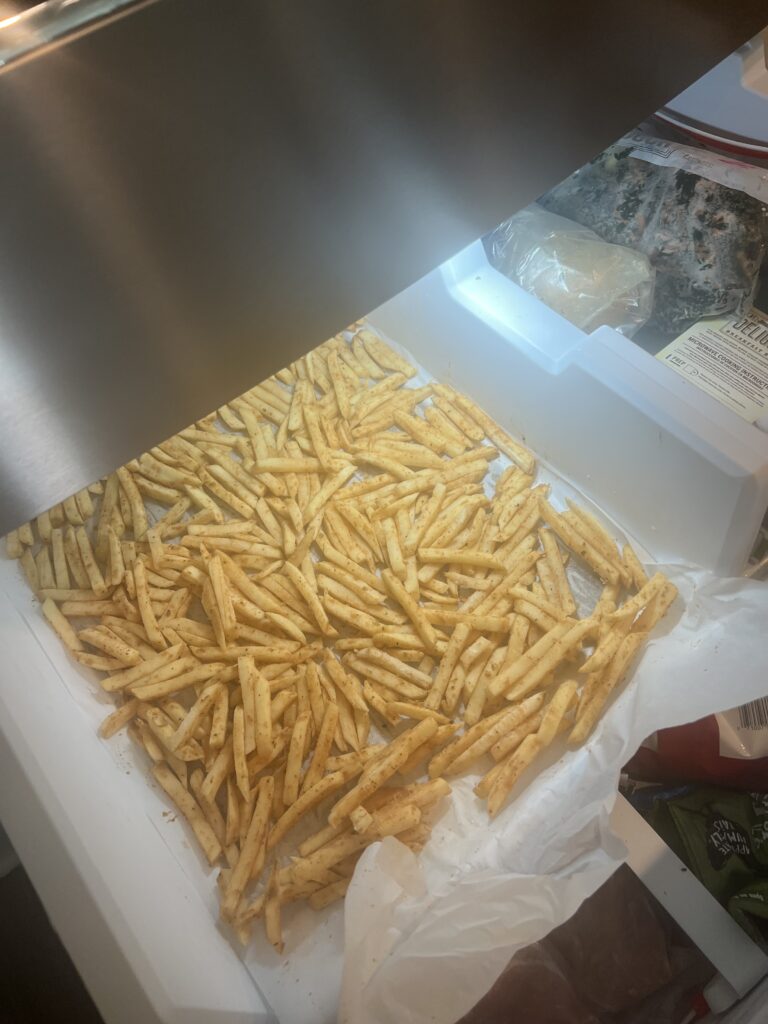
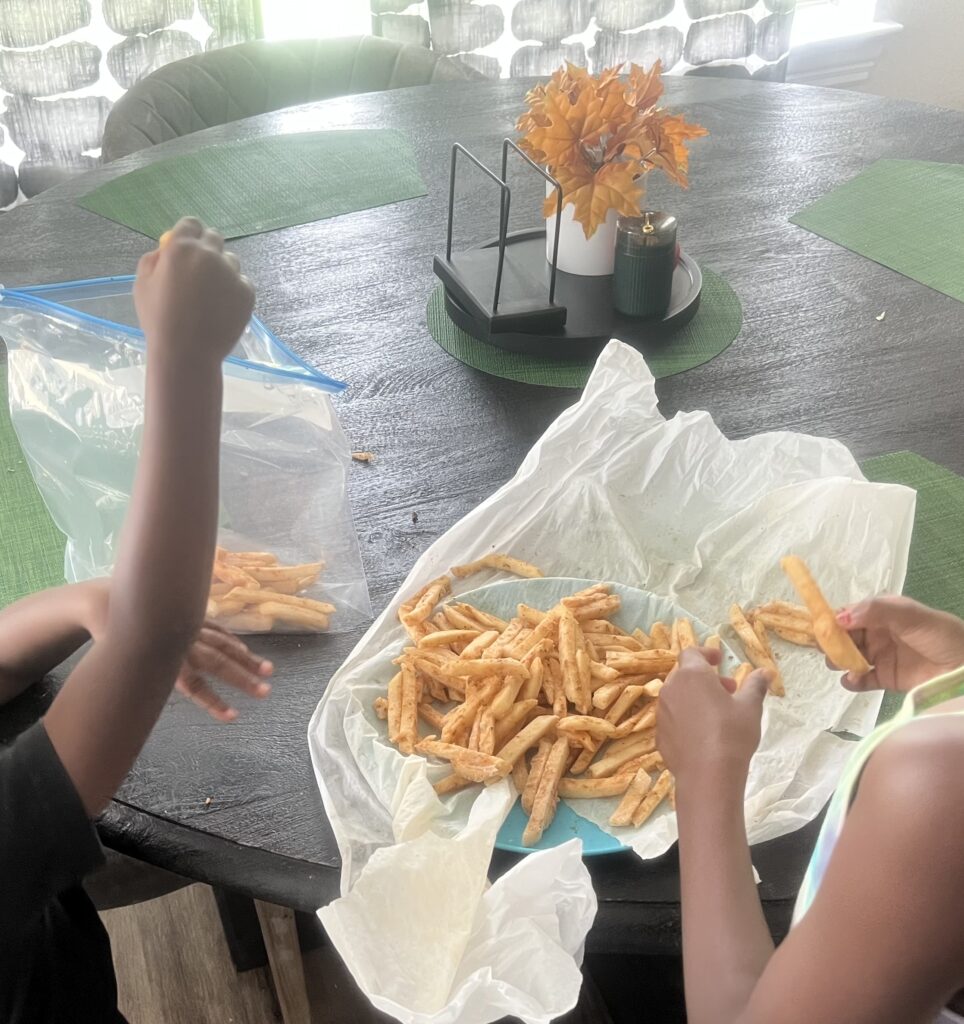
Potato processing and preservation focused on transforming a familiar favorite into a teachable moment. Because fries are a food many participants already enjoy, the activity was intentionally designed to show how this commonly purchased processed item can be made thoughtfully and from scratch.
The instructor prepared the potatoes by cutting them into fry-shaped pieces, after which participants took the lead in seasoning. The fries were then laid flat and frozen to prevent clumping before being transferred into freezer bags for later use. This step-by-step process introduced participants to practical food preservation techniques while reinforcing the importance of preparation, organization, and proper storage.
By making a favorite food themselves, participants learned that preservation is not only about extending shelf life—it is also about reclaiming agency over how food is made, stored, and consumed.
Why This Matters Before the Garden
By starting in the kitchen, young participants learned that growing food is only one part of the system. Preparation, processing, and preservation all matter. These early lessons built context for later work with soil, worms, and garden beds.
When children eventually planted seeds, they already understood why it mattered.
This was the foundation.
Learning Spotlight
Key skills introduced: measuring, sequencing, food processing, preservation, responsibility, and respect for resources.
👉 This post is part of DHCG’s ongoing series, From Soil to Stewardship, documenting how the youth learn agriculture, self-reliance, and care for the land through hands-on experiences.
View all posts in this series.
👉 Visit our events page to join in on the fun!