From Soil to Stewardship: A Year of Learning at Dew of Heaven Children’s Garden — Part 5
Some of the most meaningful agricultural lessons happen beyond the garden itself.
As part of the learning journey at Dew of Heaven Children’s Garden, participants stepped outside the garden fence to experience agriculture, conservation, and environmental systems at work in real-world settings. These field experiences were designed to expand perspective—showing participants how the concepts they practiced on-site connect to larger ecosystems, operations, and career pathways.
Donor Spotlight: Expanding Access Through Experience
Access to high-quality learning environments is often made possible through generosity.
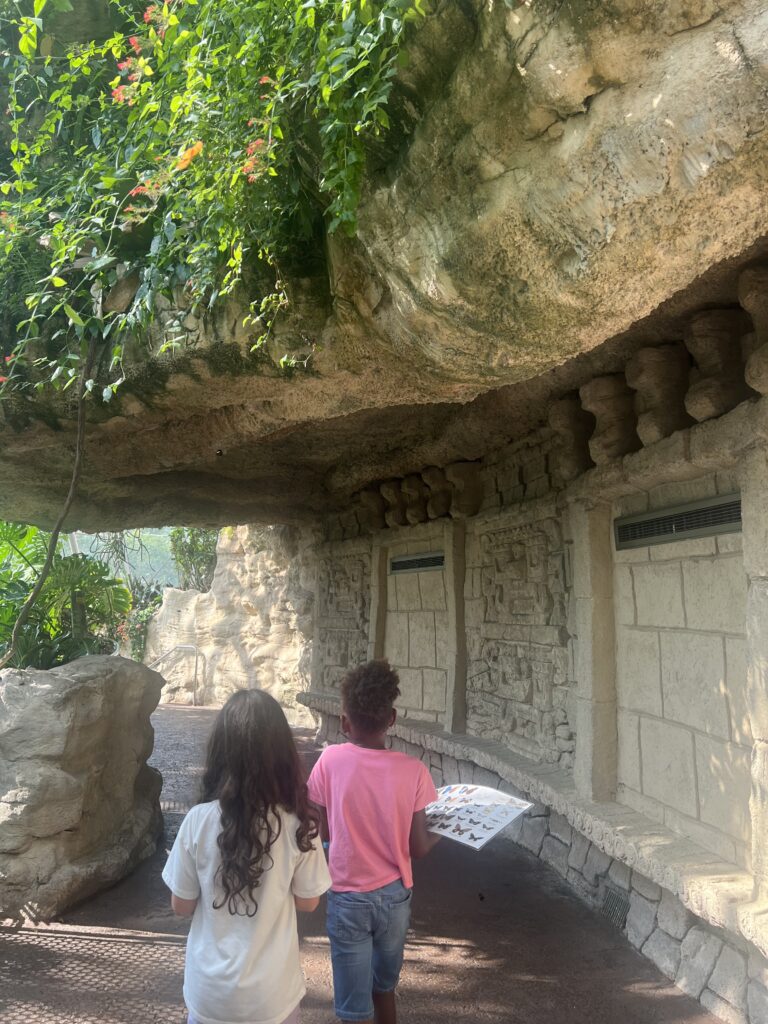
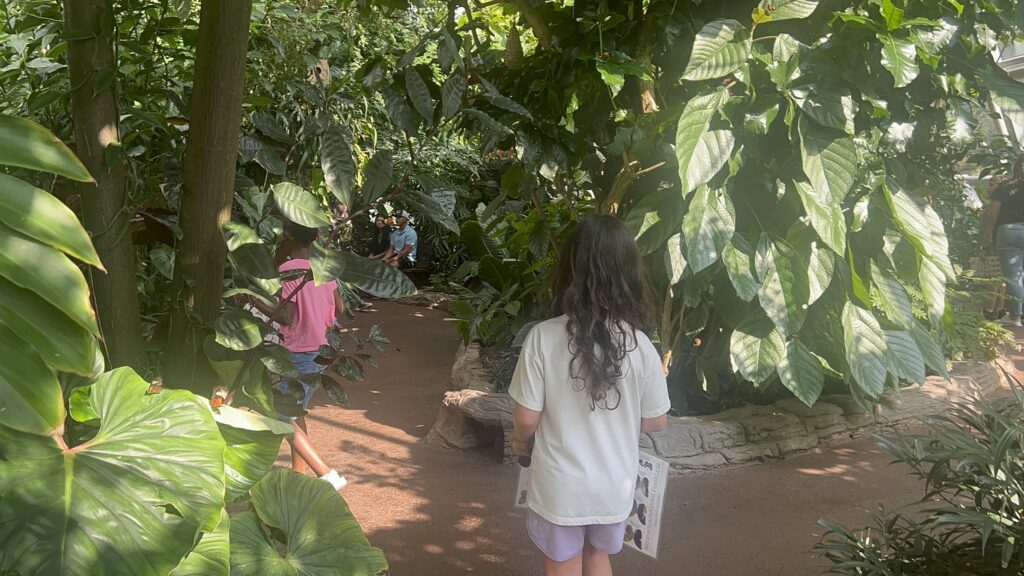
Admission tickets to the Cockrell Butterfly Center at the Houston Museum of Natural Science were donated by a generous individual donor. This in-kind contribution allowed participants to engage directly with living systems, ecosystems, and conservation concepts in an immersive setting.
Experiences like these strengthen agricultural education by placing learning in context and inspiring curiosity beyond the classroom or garden.
Exploring Living Systems at the Butterfly Center
At the Cockrell Butterfly Center, participants observed butterflies, plants, and insects interacting within a carefully maintained ecosystem. The visit reinforced lessons on life cycles, pollination, and habitat design, connecting directly to concepts later applied in the garden.
Being in a living exhibit helped participants understand how intentional design supports plant and insect health—an idea mirrored in their own garden planning and care.
Visiting an Operating Farm
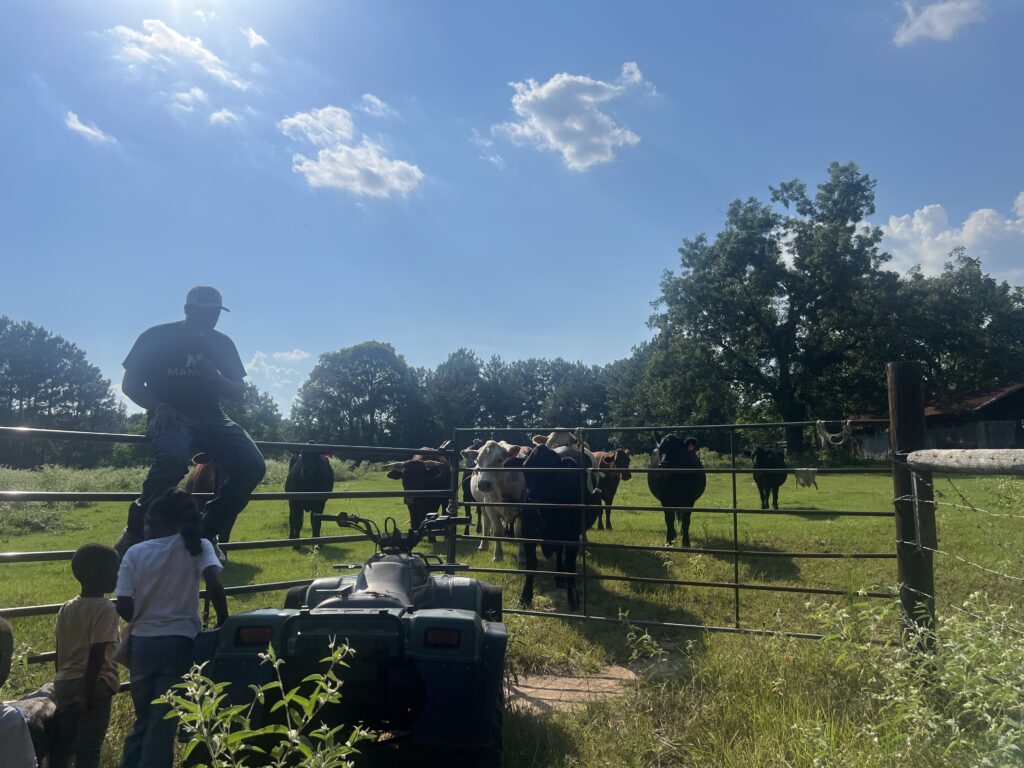
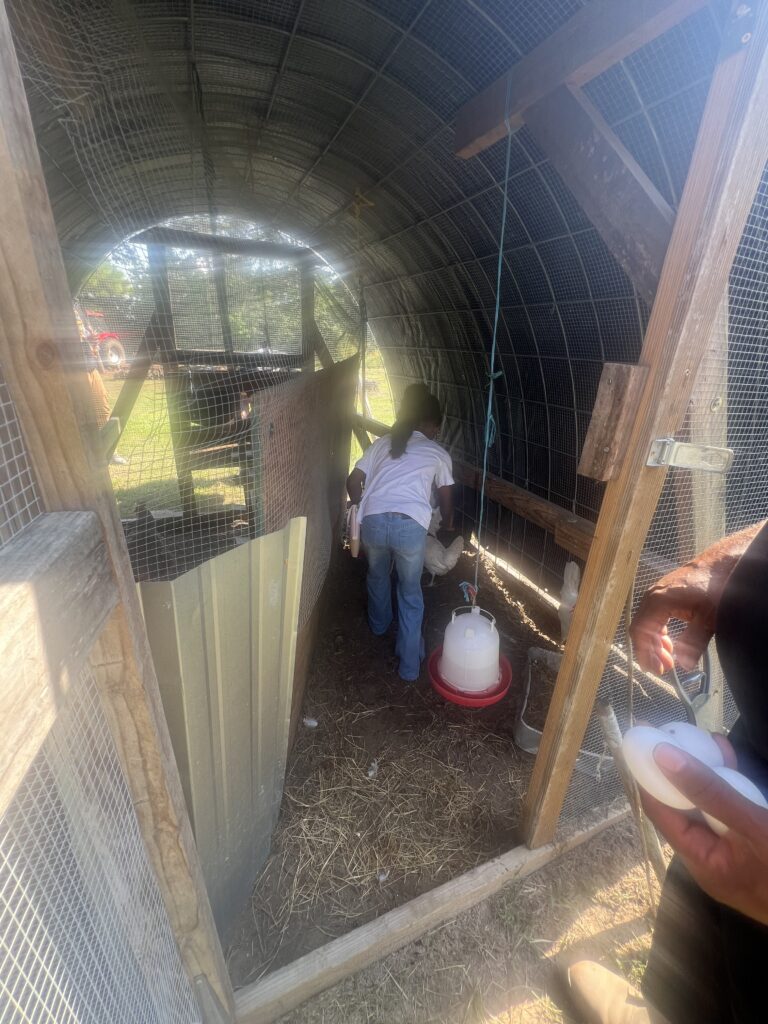
Participants also visited a working farm, where learning came alive through direct exposure. During the visit, participants:
- Learned about chickens and collected fresh eggs
- Observed the farm’s garden and discussed crop care
- Learned the basics of cattle ranching
- Explored the role horses play in daily farm operations
Seeing these systems in action helped participants understand how multiple enterprises often operate together on a single property. Being physically present on a farm generated excitement and curiosity that cannot be replicated through instruction alone.
Learning from Garden Centers
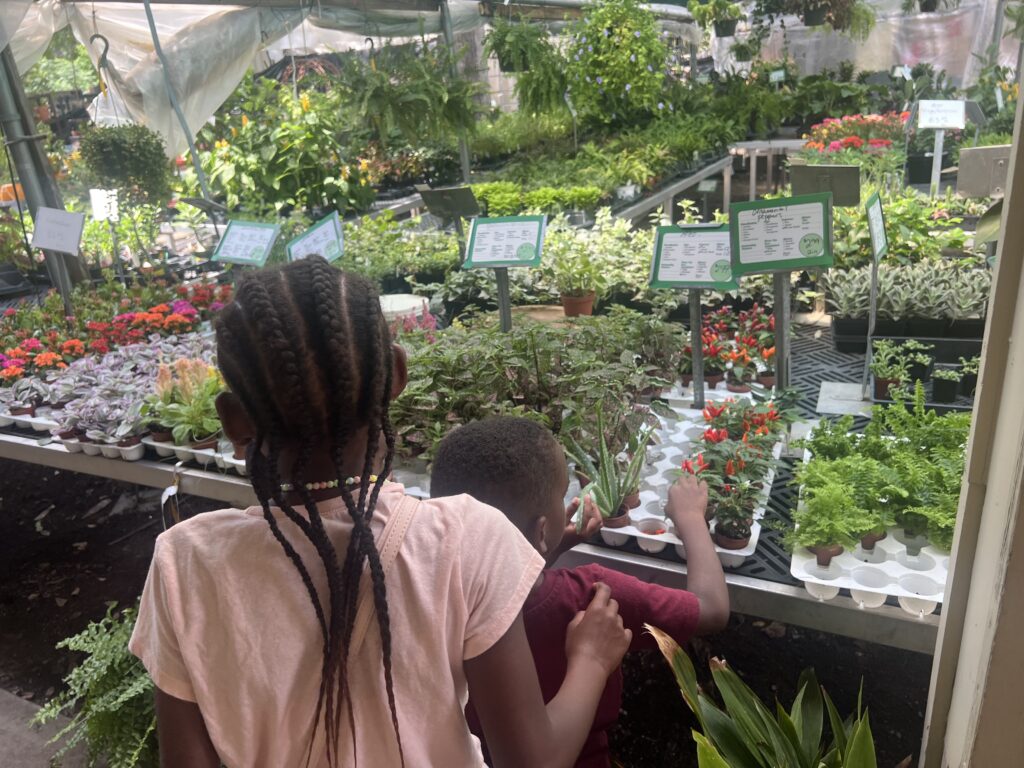
Visits to local garden centers provided participants with access to horticultural expertise. Staff members spoke directly with participants about:
- Best practices in growing and plant care
- Selecting plants appropriate for purpose and space
- Identifying plants native to Texas
- Understanding regional growing conditions and hardiness zones
These conversations reinforced that successful gardening requires informed decision-making and region-specific knowledge—not guesswork.
Inspiration at the Harris County Master Gardeners Demonstration Garden
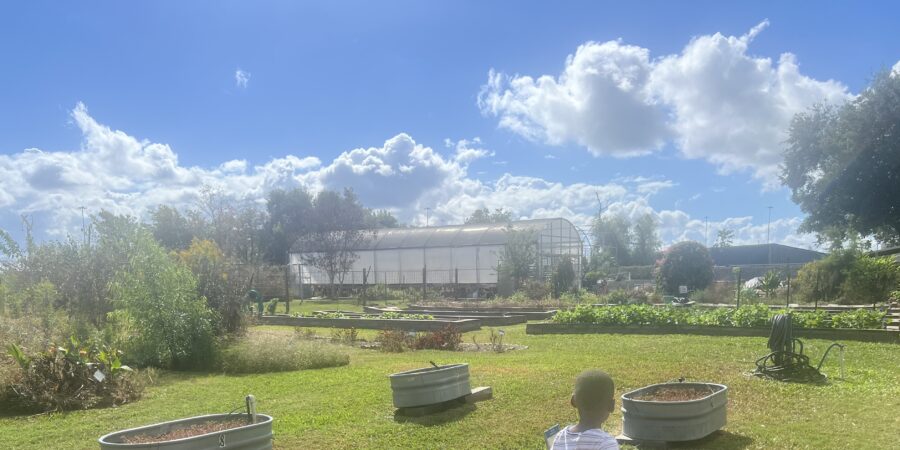
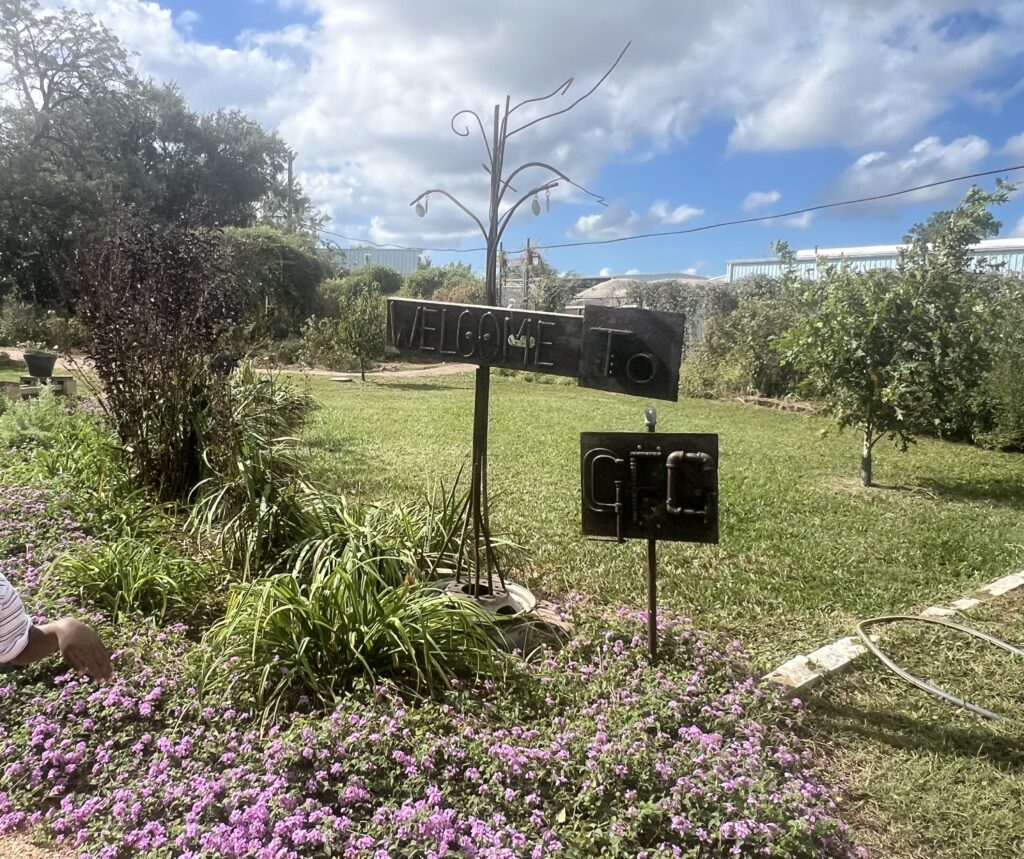
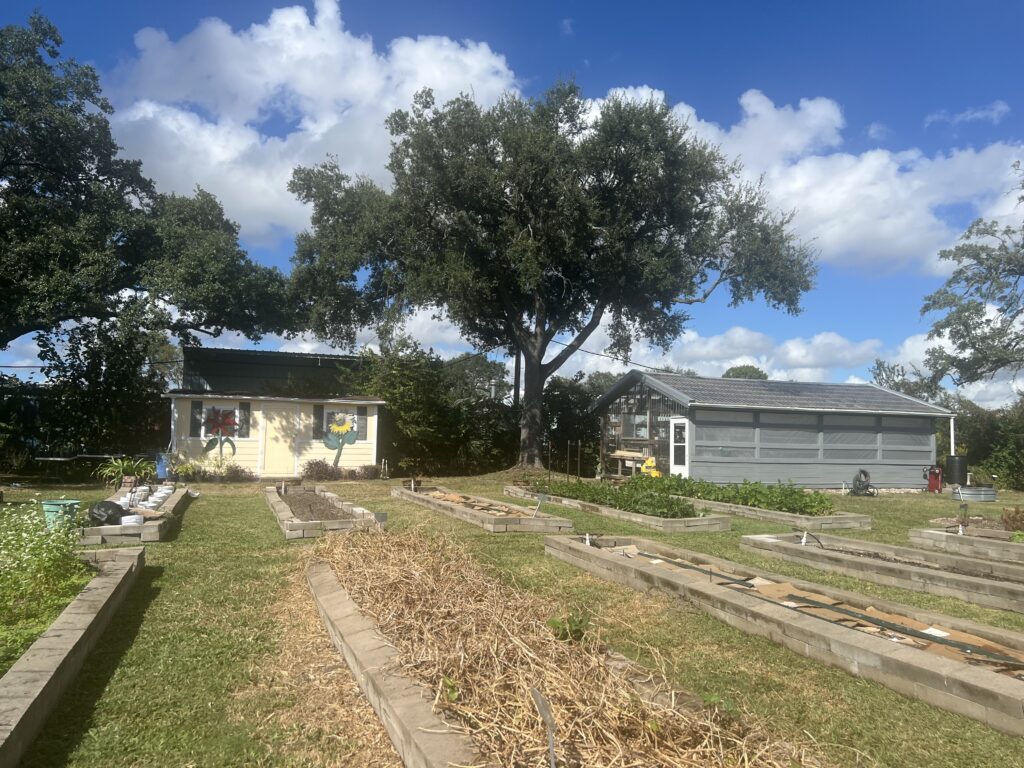
Participants traveled more than an hour to tour the Harris County Master Gardener flagship demonstration garden. The site served as an aspirational example of what intentional design, long-term care, and community stewardship can achieve.
Walking through the demonstration garden allowed participants to envision how their own site could grow and evolve over time. The experience reinforced that gardens are built gradually, through planning, patience, and sustained effort.
Seeing Soil at Scale
Participants also visited the composting center where the garden’s soil was sourced. Touring the facility provided insight into how organic soil is produced on a large scale—from organic inputs to finished material.
This visit connected earlier worm composting lessons to industrial-scale operations, helping participants understand that the principles they practiced in small systems also apply at much larger levels.
Why Field Experiences Matter
Learning beyond the garden fence reinforced a core program message: agriculture exists within interconnected systems. Farms, gardens, compost facilities, and conservation sites all contribute to how food is grown, soil is built, and ecosystems are sustained.
By experiencing these environments firsthand, participants gained perspective, motivation, and a deeper understanding of how their own garden fits into a broader agricultural landscape.
Learning Spotlight
Key concepts reinforced: ecosystems, scale, regional growing conditions, agricultural enterprises, conservation, and visioning for future growth.
👉 This post is part of DHCG’s ongoing series, From Soil to Stewardship, documenting how participants expand agricultural knowledge through hands-on experiences both on-site and beyond the garden.
View all posts in this series.
👉 Visit our Events Page to join in on the fun!